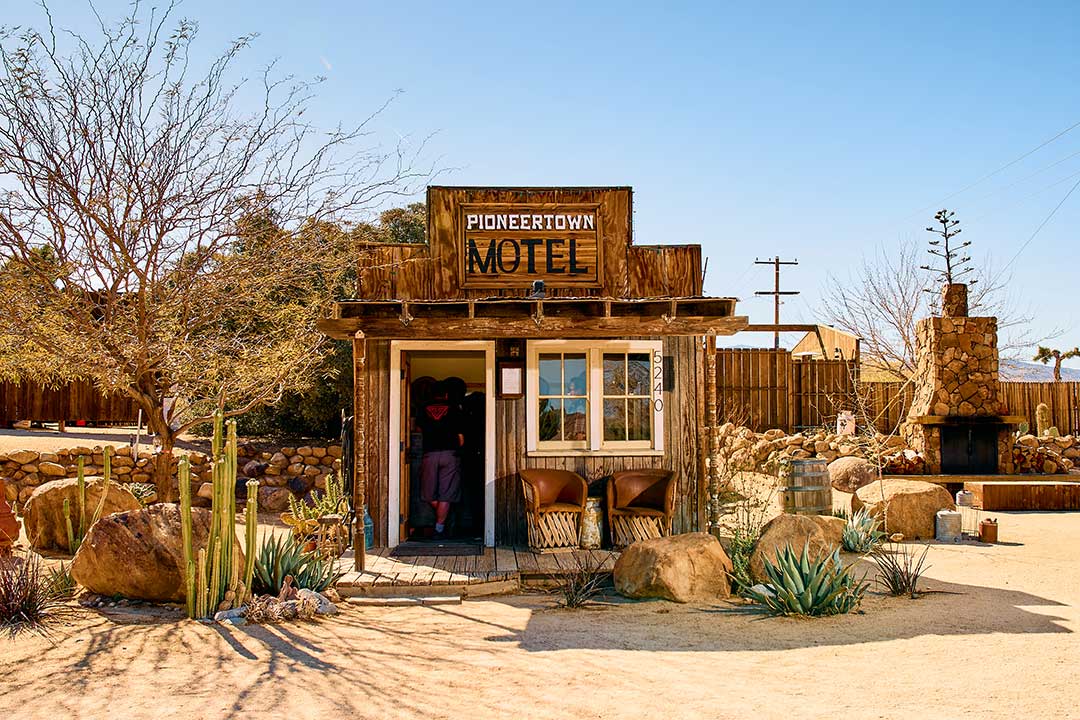

In the arid, wind-swept expanse of the Mojave Desert, where the harsh sun beats down on scrub brush and rocky outcrops, lies Pioneertown. Established in 1946, this unique California settlement was conceived as something entirely unprecedented: a living, breathing 1880s Western town that would serve both as a functional movie set and a real community. However, according to the historical accounts and archives documented, the grand vision of its founders was soon corrupted by corporate greed. The tragic ousting of the original creators and the subsequent, spectacular failure of the project under new leadership serve as a fascinating cautionary tale of what happens when authentic vision is sacrificed for commercial exploitation.
The original dream belonged to Dick Curtis, a broad-shouldered Hollywood actor famous for playing the heavy or the outlaw villain in countless B-westerns. As Curtis gazed out over the rugged high-desert landscape, he recognized a costly, nagging problem in the movie industry: the immense expense of transporting actors, crews, horses, extras, and equipment to remote location shoots. Curtis envisioned a complete Western town set squarely in the desert bowl—not a collection of flimsy false facades, but permanent, functional buildings where actors could live, work, and shoot authentic films without the logistical nightmares.
In the summer of 1946, Curtis brought his dream back to Hollywood and convinced a syndicate of his high-profile friends to invest. Seventeen partners, including legendary cowboy stars like Roy Rogers, Russell “Lucky” Hayden, and the renowned vocal group the Sons of the Pioneers, put up $500 each. They formed a corporation, purchased 32,000 acres of land encompassing the valley, and began construction. (Though Hollywood myth and later promotional materials often mistakenly included Gene Autry among these original investors, Autry’s true legacy lay in the town’s operational phase. The founders actively recruited him later, convincing him to bring his Columbia Westerns to the desert. Autry would go on to film his iconic television show there, cementing his connection to Mane Street, but he was not among the original corporators). By 1947, Pioneertown was a bustling reality. With a genuine Mane Street, corrals, saloons, and functioning local businesses, it was a place where fantasy seamlessly blended with reality.
Yet, as often happens when a beautiful dream takes shape, the allure of easy money began to attract those who sought to exploit it. By 1948—a mere two years after the town’s founding—the unity of the original syndicate fractured. Curtis and the authentic Hollywood founders found themselves at odds with ambitious developers who had gained influence over the partnership. These developers had little interest in preserving the rugged, artistic soul of a living movie set; instead, they viewed Pioneertown merely as a charming commodity that could be heavily commercialized and milked for massive profits.
The ousting of Dick Curtis was neither quiet nor amicable. The partnership soured rapidly, culminating in legendary, red-faced screaming matches right on Mane Street. Curtis, furious that his once-trusted partners were betraying the essence of the settlement, famously clenched his fists and issued a dire warning to the encroaching opportunists: “This town ain’t meant to be paved and poisoned!” Despite his passion, Curtis was muscled out of the very project he had birthed. The visionary founders were sidelined, leaving the fate of Pioneertown in the hands of developers whose eyes were fixed squarely on the bottom line.
The failure of the project after the founders lost control was swift and dramatic. Without the Hollywood connections, passion, and genuine love for the desert that Curtis and his peers provided, the movie studios quickly lost interest. Efforts to lure new film productions to the desert failed miserably; producers ignored Pioneertown’s natural wonders and instead took their location companies to New Mexico and Arizona. The once-bustling town began to resemble the exact thing it was trying to avoid becoming: an actual ghost town.
Worse still, the developers who ousted Curtis soon met with complete ruin, birthing the legend of the “Dick Curtis Curse.” According to local lore, the desert itself seemed to fight back against the greedy men who tried to tame it. Within a year of Dick Curtis’s death, the Pioneertown Land Company fell into bankruptcy. But the grandest, most disastrous failure of the post-founder era was still to come under the guise of the “California Golden Empire.”
In a desperate attempt to salvage their investments and transform the failing movie town into a massive cash cow, outside developers—led by figures like Benton Lefton, a former developer from Cleveland—launched the California Golden Empire project. This was a wildly ambitious scheme intended to turn Pioneertown and its surrounding 30 square miles into a glitzy, master-planned residential and commercial destination. The plans were staggering in their scope: 15,000 building lots, 500 two-acre residential sites, cluster homes, massive shopping centers, an airport, promenades, luxury hotels, and even talk of casinos. Glossy brochures were printed, investors were dazzled, and a health guru was even brought in to aggressively market the pure air, soil, and water of the region to prospective buyers.
However, the California Golden Empire project was built on a foundation of sand—and crucially, a profound lack of safe water. The developers quickly realized that to sustain a 30-square-mile glamorous resort town in the high desert, they needed a massive, reliable water supply. When they finally managed to locate a subterranean water source and drill the necessary wells, the results of the environmental testing were catastrophic. The water contained dangerously high levels of naturally occurring arsenic and uranium.
This toxic discovery was the final nail in the coffin for the commercial developers. The California Golden Empire project collapsed in total disgrace. The grand empire of hotels and shopping centers evaporated overnight, its ambitious plans turning to literal desert dust. The financial backers fled the area, leaving behind a trail of sunburns, abandoned blueprints, and tangled lawsuits. The developers who had so arrogantly ousted Dick Curtis and promised to pave and profit off the desert were utterly defeated.
In the end, the history of Pioneertown is a testament to the dangers of untethered greed and the loss of foundational vision. The original founders were pushed out because their artistic, historical dream stood in the way of a commercialized tourist trap. Once they were gone, the soul of the project vanished with them, leading to studio abandonment, corporate bankruptcy, and the literal poisoning of a multi-million-dollar real estate empire due to arsenic-laced water. As the dust settled over Mane Street, only the hardiest locals remained, proving Dick Curtis right: Pioneertown was never meant to be paved and poisoned. It was a place that ultimately rejected the greedy, reserving its rugged survival only for those who truly respected the harsh beauty of the desert.