Just Like a Movie
Even in California, Pioneertown rates as something special. For here is an entire community—schools, saloons, dusty streets—that was built to provide a permanent set for Western movies.

These are newspaper articles with stories involving the founders who developed Pioneertown Ca. USA.
Even in California, Pioneertown rates as something special. For here is an entire community—schools, saloons, dusty streets—that was built to provide a permanent set for Western movies.
The faded store fronts, hitching rails, dirt Main St. and other mementos of early California are still much the same in Pioneertown, the movie and television shooting location 120 miles from Los Angeles just off the Twentynine Palms highway in the San Bernardino County desert.
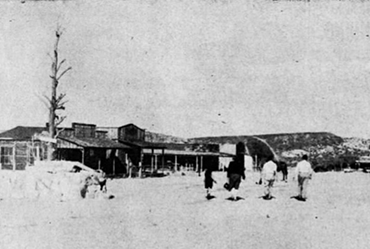
Of all San Bernadino County's unique locations--mountains, lakes, forests, desert--perhaps the most outstanding and picturesque is Pioneertown, which has a pair on more movie and TV screens and any other spot of the Old West.
The reason for not driving on Mane Street is that it might be hired out that day to a movie company, for Pioneertown is in reality a movie set inhabited by people. It was established in 1946 by Dick Curtis, a heavy of the silent hoss opera. Some 300 citizens moved in, and each agreed to build a business with a Western front.
Should anyone know of a boulevardier without a boulevard, the local main street is for hire at $25 a day. In this home of the hoss opera, however, it is called Mane street. There is a big sign as you drive in from the desert hills and it says “Please do not drive on Mane street.” This is sort of a one-yak town.
PIONEERTOWN, "a replica of the West as it used to be" is a town built to function both as a permanent western movie set and as a real town with legitimate business houses. It is located on the high desert about 30 miles north of Palm Springs. It Is the birthplace of the Judge Roy Bean series and other famous Westerns.
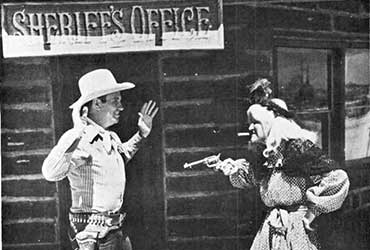
WE ENTERED the central compound of Pioneertown with caution, expecting a fight to tumble through the saloon doors any minute, or the "fastest gun in the West" to make a fast draw. It was soon evident, though, that our fears were unfounded—this town is only a fascinating echo of the West's wild past.
The Agua Caliente Indians extended to the Boy Scouts of America a lease in Chino Canyon for a camp, which would not have permanent buildings and would be for the exclusive use of the Boy scouts.